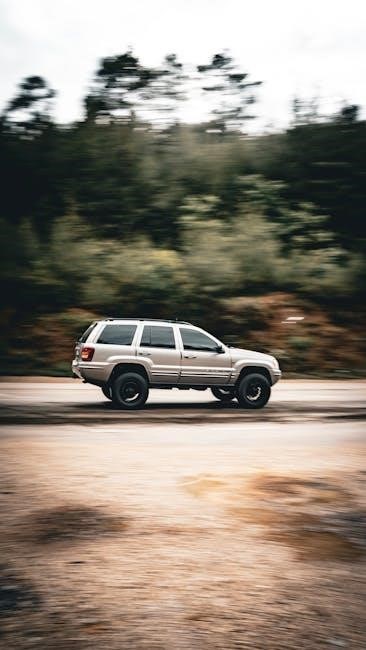
Understanding Manual Shift in Your Jeep Grand Cherokee
Paddle Shift Mode offers drivers interactive control, maximizing engine braking and providing a more engaging driving experience within your Jeep Grand Cherokee.
Benefits of Manual Control include enhanced responsiveness, precise gear selection, and the ability to tailor shifting to specific driving conditions and preferences.
What is Paddle Shift Mode?
Paddle Shift Mode is a driver-interactive transmission feature designed to give you more control over your Jeep Grand Cherokee’s gear selection. It allows for manual gear shifting without needing to move the traditional gear selector. This system utilizes steering wheel-mounted paddles – one for upshifting and one for downshifting – enabling quick and precise gear changes.
Essentially, it bridges the gap between fully automatic operation and complete manual control. You can maximize engine braking during deceleration or maintain a specific gear for optimal performance. The system is outlined on page 116 of the Jeep Grand Cherokee User Manual, offering a more engaging driving experience.
Benefits of Manual Control
Manual control via paddle shifters offers several advantages for Jeep Grand Cherokee drivers. Enhanced responsiveness is a key benefit, allowing for quicker acceleration and deceleration based on driver input. Precise gear selection enables you to maintain optimal engine RPM for various driving scenarios, like climbing hills or navigating winding roads.
Furthermore, manual control facilitates maximizing engine braking, providing increased stopping power and reducing wear on the brake pads. It also allows drivers to tailor shifting to their individual preferences and driving styles, creating a more connected and engaging experience. This feature truly puts you in command of your vehicle’s performance.
Identifying When Manual Shift is Active
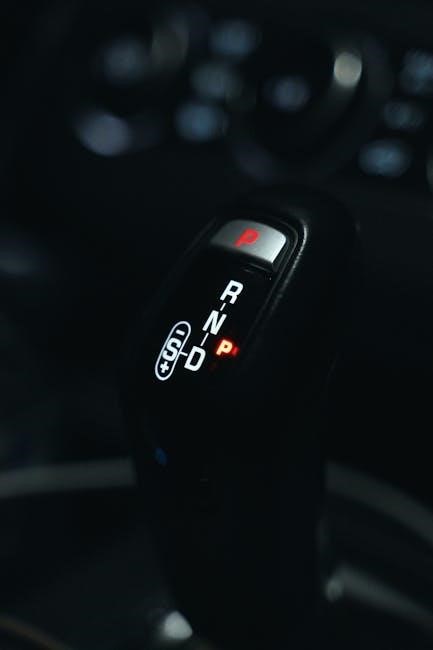
Dashboard Indicators will illuminate, signaling active manual mode. Observe the gear selection display; it will show the current gear instead of ‘D’.
Steering Wheel Paddle Operation confirms activation; using the paddles will visibly shift gears on the dashboard display.
Dashboard Indicators
Recognizing manual shift activation relies heavily on observing your Jeep Grand Cherokee’s dashboard. When Paddle Shift Mode is engaged, a distinct indicator illuminates, clearly displaying that the transmission is no longer in fully automatic operation. This indicator’s specific appearance can vary slightly depending on the model year, but it consistently signals a shift to driver-controlled gear selection.
Crucially, the gear selector display will change. Instead of simply showing “D” for Drive, it will prominently display the currently selected gear – “1”, “2”, “3”, and so on. This immediate visual cue confirms that you are actively controlling gear changes using the steering wheel-mounted paddles. Paying attention to these indicators is the first step in understanding when and how to disengage manual shift mode.
Steering Wheel Paddle Operation
The steering wheel paddles are the primary interface for manual gear selection. The right paddle executes an upshift, moving to a higher gear, while the left paddle commands a downshift to a lower gear. These actions override the automatic transmission’s default behavior, granting you direct control.
However, accidental activation is common. Many drivers report inadvertently bumping the paddles while adjusting audio volume using the steering wheel controls. This highlights the importance of awareness and potentially disabling the paddles if frequent accidental shifts occur. Remember, consistent paddle use maintains manual mode; simply not using them doesn’t automatically revert to Drive.
Methods to Turn Off Manual Shift
Returning to Drive involves pushing and holding the shifter to the right, while disabling paddles can be done through vehicle settings to prevent accidental activation.
Using the Shifter: Returning to Drive
To effectively disengage Manual Shift Mode and revert to standard automatic operation in your Jeep Grand Cherokee, a simple yet reliable method exists. According to discussions within the Jeep Wrangler Forum, the key lies in utilizing the gear shifter itself.
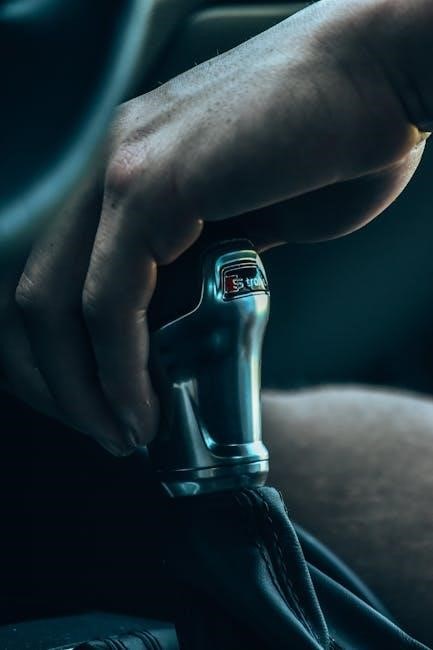
Specifically, push and hold the shifter firmly to the right (towards the ‘upshift’ position). This action serves as a direct command to the transmission, overriding the manual control and seamlessly returning the vehicle to fully automatic Drive mode.
This technique provides a quick and intuitive way to regain automatic shifting, especially useful if you prefer the convenience of letting the transmission manage gear changes for you. It’s a straightforward solution for drivers seeking to easily exit Manual Shift Mode.
Disabling Paddle Shifters Through Vehicle Settings
A highly effective solution for preventing accidental activation of Manual Shift Mode, and permanently disabling the paddle shifters, involves accessing your Jeep Grand Cherokee’s vehicle settings. As highlighted in discussions on the Jeep 392 Forum, a dedicated option exists within the vehicle’s menu system to deactivate the paddle shifters entirely.
Navigate to the settings menu, typically found through the vehicle’s infotainment screen, and locate the transmission or driving mode options. Within these settings, you should find a toggle or switch specifically designed to enable or disable the paddle shifters.
Selecting the ‘off’ or ‘disabled’ setting ensures the paddles will no longer initiate Manual Shift Mode, eliminating the risk of unintended gear changes caused by inadvertent contact.
The Role of Sport Mode
Sport Mode plays a significant role in managing the transmission behavior of your Jeep Grand Cherokee, and can indirectly influence Manual Shift functionality. While not a direct ‘off’ switch for the paddles, activating Sport Mode can alter the transmission’s responsiveness and default shifting patterns.
Specifically, for the 2024 Jeep Grand Cherokee 4Xe, utilizing Sport Mode appears to override certain automatic features, potentially mitigating unwanted shifts initiated by the paddles. It’s noted in Jeep Wrangler 4xe Forum discussions that Sport Mode offers a different driving experience.
However, it’s crucial to understand that Sport Mode doesn’t necessarily disable the paddles themselves; it simply changes how the transmission reacts to their input.
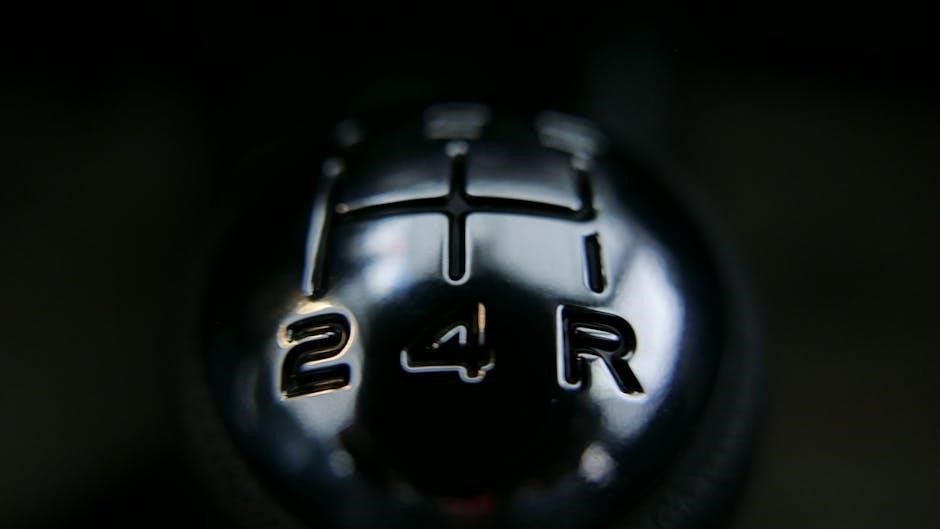
Troubleshooting Manual Shift Issues
Accidental Paddle Activation is common, especially when adjusting steering wheel controls; disabling the paddles via vehicle settings resolves this interference effectively.
Fat Finger Interference with steering wheel controls can trigger unwanted shifts, easily fixed by deactivating the paddle shifters in the vehicle’s system.
Accidental Paddle Activation
Many Jeep Grand Cherokee drivers experience unintentional activation of the paddle shifters, particularly while operating other steering wheel-mounted controls like volume adjustments. This is a frequently reported issue, especially with the positioning of the paddles relative to common control buttons.
The solution, consistently recommended across Jeep forums like the Jeep 392 Forum, is to disable the paddle shifters entirely through the vehicle’s settings menu. This prevents inadvertent gear changes caused by accidental contact. This simple adjustment eliminates the problem, ensuring a smoother and more predictable driving experience. It’s a quick fix that avoids frustration and maintains control.
By deactivating the paddles, you regain full confidence in the transmission’s automatic operation, removing the risk of unexpected shifts during normal driving maneuvers.
Fat Finger Interference with Steering Wheel Controls
A common complaint among Jeep Grand Cherokee owners revolves around accidental engagement of the paddle shifters due to “fat finger” interference with steering wheel controls. Specifically, adjusting the radio volume using buttons near the paddles frequently results in unintended gear shifts.
As highlighted on the Jeep 392 Forum, the proximity of these controls creates a scenario where inadvertent contact with the paddles is highly probable. The recommended solution, repeatedly emphasized by users, is to navigate to the vehicle’s settings and completely disable the paddle shifters.
This straightforward fix effectively eliminates the issue, preventing unwanted gear changes and restoring seamless control of the audio system without compromising transmission functionality. It’s a practical solution for a frequently encountered problem.
Resetting Transmission Behavior
Clearing the transmission’s adaptive memory using a scan tool, as suggested by JustAnswer’s Kurt Mulling, can help restore default shifting patterns and resolve issues.
Clearing Transmission Adaptive Memory
According to a Lead Tech at D&DTire, utilizing a scan tool to clear the transmission’s adaptive memory is a potential solution for resetting shifting behavior in your Jeep Grand Cherokee. This process essentially instructs the transmission control module (TCM) to “forget” learned driving habits.
Over time, the TCM adapts to your unique driving style, potentially contributing to unwanted manual shift engagement or lingering behavior after disengaging paddle shifters. By clearing this memory, you return the transmission to its factory default settings, allowing it to relearn optimal shift points based on current driving conditions. This can be particularly helpful if accidental paddle activation or interference has caused unintended adaptations.
However, remember this is a more advanced troubleshooting step and may require professional assistance if you are unfamiliar with scan tools and vehicle diagnostics.
The Importance of Scan Tools
While several methods exist to address unwanted manual shift activation, scan tools offer a deeper level of diagnostic and corrective capability for your Jeep Grand Cherokee’s transmission. As highlighted by a Lead Tech, these tools allow for clearing the transmission’s adaptive memory – a crucial step in resetting shifting behavior.
Beyond memory clearing, scan tools can reveal diagnostic trouble codes (DTCs) potentially linked to the issue, providing valuable insights into the root cause. They can also monitor live transmission data, helping pinpoint inconsistencies or malfunctions. However, utilizing scan tools effectively requires a degree of technical expertise.
Incorrect usage could potentially exacerbate the problem, so professional assistance is recommended if you lack experience with vehicle diagnostics.
Maintaining Smooth Transmission Operation
Regular Transmission Fluid Checks and timely Fluid Changes are essential for optimal performance, preventing issues and supporting the reliable function of your Jeep’s transmission.
Regular Transmission Fluid Checks
Maintaining the correct transmission fluid level is crucial for smooth shifting and preventing damage. Periodically check the fluid using the dipstick, ensuring the engine is warm and the vehicle is on a level surface.
Look for a bright red color and a sweet smell; dark or burnt-smelling fluid indicates a need for a change. Addressing minor fluid level issues promptly can prevent more significant problems. Remember, consistent monitoring contributes to the longevity of your Jeep Grand Cherokee’s transmission, especially when utilizing manual shift modes.
Proper fluid levels support the reliable operation of paddle shifters and overall transmission health.
Importance of Fluid Changes
Regular transmission fluid changes are vital for optimal performance and longevity, particularly with frequent use of manual shift modes. Over time, transmission fluid degrades, losing its lubricating properties and accumulating debris.
Following the manufacturer’s recommended service intervals – typically every 30,000 to 60,000 miles – ensures the transmission remains protected. Fresh fluid helps dissipate heat, reduces friction, and keeps internal components clean. Neglecting fluid changes can lead to costly repairs or even transmission failure.
Maintaining clean fluid supports smooth gear transitions and reliable paddle shifter operation.
Specific Model Considerations
2015 Jeep Grand Cherokee benefits from clearing transmission adaptive memory via a scan tool, while the 2024 Jeep Grand Cherokee 4Xe utilizes Sport mode.
2015 Jeep Grand Cherokee
For the 2015 Jeep Grand Cherokee Summit 3.0L EcoDiesel, owners encountering unwanted manual shift activation can explore several solutions. A highly recommended method involves utilizing a scan tool to clear the transmission adaptive memory. This process effectively resets the transmission’s learned behavior, potentially resolving the issue of automatic engagement into manual mode.
Furthermore, maintaining optimal transmission health is crucial. Regular transmission fluid checks and timely fluid changes contribute significantly to smooth operation and can prevent erratic shifting. If accidental paddle activation occurs due to interference with steering wheel controls, consider addressing the physical cause or adjusting your hand positioning.
Remember, this information is intended as general guidance, and consulting a verified expert on platforms like JustAnswer is advisable for personalized advice tailored to your specific vehicle and situation.
2024 Jeep Grand Cherokee 4Xe
Owners of the 2024 Jeep Grand Cherokee 4Xe have a convenient option for disabling the paddle shifters: accessing the vehicle’s settings menu. Within the settings, a dedicated function allows you to turn off the paddles, preventing accidental activation while adjusting steering wheel controls like volume. This eliminates the frustration of unintended gear changes caused by “fat finger” interference.
Alternatively, utilizing Sport Mode can also influence transmission behavior. While not directly disabling the paddles, Sport Mode adjusts shift points and responsiveness, potentially mitigating unwanted manual intervention. Remember that the 4Xe model shares some features with the Wrangler 4xe, offering similar control options.
Always refer to your owner’s manual for specific instructions and ensure a safe driving experience.
Advanced Techniques & Considerations
Driver-interactive control allows disabling paddles via vehicle settings, preventing accidental shifts; Sport Mode offers an alternative, influencing transmission behavior for a smoother ride.
Maximizing Engine Braking
Paddle Shift Mode truly shines when maximizing engine braking, offering drivers precise control during descents or when approaching corners. By proactively downshifting, you leverage the engine’s resistance to slow the vehicle, reducing reliance on the brake pedal. This technique not only extends brake life but also enhances stability, particularly on challenging terrain.
Remember, disabling the paddle shifters through vehicle settings or utilizing Sport Mode can revert to automatic shifting, relinquishing this manual control. However, when actively engaged in Paddle Shift Mode, anticipate turns and downshift accordingly to harness the full potential of engine braking. This provides a more controlled and confident driving experience.
Driver-Interactive Control
Paddle Shift Mode embodies driver-interactive control, allowing you to dictate gear selection instead of relying solely on the automatic transmission. This feature isn’t just about speed; it’s about connection and responsiveness; You can hold the shifter to the right to return to automatic drive, effectively disabling manual control.
Furthermore, exploring vehicle settings provides an option to completely disable the paddle shifters, preventing accidental activation. Sport Mode also influences this interaction, potentially altering shift points. Ultimately, this system empowers you to tailor the driving experience to your preferences, offering a blend of convenience and engagement. It’s about having the power when you want it.
Safety Precautions
Understand transmission limits and avoid unintended gear changes; disable paddles via settings if accidental activation occurs due to steering wheel controls.
Understanding Transmission Limits
It’s crucial to recognize that the Jeep Grand Cherokee’s transmission, even in manual shift mode, has inherent limitations. Avoid aggressively downshifting at excessively high speeds, as this can potentially overstress the drivetrain components. Be mindful of the engine’s RPM range; consistently redlining the engine isn’t recommended.
The transmission control module (TCM) is designed to protect itself, and may intervene to prevent damage, even with paddle activation. Familiarize yourself with the vehicle’s operational parameters as outlined in the owner’s manual. Disabling the paddle shifters in the vehicle settings is a proactive safety measure if you find yourself unintentionally activating them while adjusting steering wheel controls.
Avoiding Unintended Gear Changes
Accidental activation of the steering wheel-mounted paddle shifters is a common concern, particularly when adjusting audio volume or other controls. Many Jeep Grand Cherokee owners report “fat finger” interference, inadvertently bumping the paddles during normal operation. A straightforward solution is to disable the paddles through the vehicle’s settings menu, eliminating the possibility of unwanted shifts.
Alternatively, practice deliberate hand positioning to minimize accidental contact. If you prefer to keep the paddles active, be consciously aware of their location. Regularly checking the dashboard indicators will confirm whether manual shift mode is engaged, allowing for quick correction if an unintended gear change occurs.
Resources for Further Information
Consult your Jeep Grand Cherokee Owner’s Manual for detailed instructions. Explore online forums like Jeep 392 Forum and Jeep Wrangler Forum for community insights.
Jeep Grand Cherokee Owner’s Manual
Your Jeep Grand Cherokee’s owner’s manual is the primary resource for understanding all vehicle functions, including the manual shift mode. It details the specific operation of the paddle shifters and provides instructions on reverting to automatic driving.
The manual explains that Paddle Shift Mode is a driver-interactive feature allowing manual gear selection for greater control. It doesn’t explicitly detail a dedicated “off” switch, but clarifies how to disengage the mode.
Typically, pushing and holding the shifter to the right (upshift position) will return the transmission to automatic operation. Refer to page 116 of the manual for specific instructions related to Paddle Shift Mode, as outlined in the ManualsLib documentation for the srt8 model.
Online Jeep Forums (Jeep 392 Forum, Jeep Wrangler Forum)
Jeep enthusiasts actively discuss solutions on forums like Jeep 392 Forum and Jeep Wrangler Forum. A common issue reported is accidental activation of manual shift due to brushing the steering wheel paddles while adjusting the radio volume.
Several users recommend navigating through the vehicle’s settings menu to completely disable the paddle shifters, preventing unintended engagement. This is a popular fix, eliminating the possibility of accidental shifts.
Other forum members suggest a simple method: pushing and holding the shifter to the right (upshift) to revert to automatic mode. These forums provide practical, user-tested solutions for managing and disabling the manual shift feature in your Jeep Grand Cherokee.
This information is AI-generated for general guidance only; consult a verified expert on JustAnswer for advice tailored to your specific Jeep Grand Cherokee.
AI-Generated Information
Please acknowledge that the information provided regarding disabling manual shift in your Jeep Grand Cherokee is generated by an artificial intelligence. While we strive for accuracy, this content is based on interpretations of online resources like JustAnswer, ManualsLib, and various Jeep forums (including Jeep 392 and Wrangler forums) as of today’s date, May 4th, 2026.
The AI has synthesized data concerning methods like utilizing vehicle settings to disable the paddles, pushing and holding the shifter to the right, and employing Sport Mode (particularly in the 4Xe models). However, variations may exist based on your specific model year (e.g., 2015 vs. 2024) and trim level. Always verify information with official Jeep documentation.
Consulting a Verified Expert
While this AI-generated information offers guidance on disabling manual shift in your Jeep Grand Cherokee, it’s crucial to understand its limitations. For personalized advice tailored to your specific vehicle and situation, consulting a verified automotive expert is highly recommended. Platforms like JustAnswer connect you with qualified technicians, such as Kurt Mulling, a Lead Tech at D&DTire, who can provide accurate diagnoses and solutions.
A professional can also assist with clearing transmission adaptive memory using scan tools, ensuring optimal shifting behavior. Remember, attempting complex repairs or adjustments without proper knowledge could potentially damage your vehicle. Prioritize expert consultation for reliable and safe results.