Taylor Dunn Parts Manual: A Comprehensive Guide
This manual details Taylor Dunn vehicle components, offering insights into maintenance, repair, and part identification for optimal operational longevity and performance.
Taylor Dunn parts are crucial for maintaining the reliability and longevity of these industrial vehicles, widely utilized in diverse settings like warehouses, manufacturing plants, and airports. Understanding these components is paramount for efficient operation and minimizing downtime. This section introduces the core elements, emphasizing the importance of genuine Taylor Dunn replacements to ensure compatibility and performance.
These vehicles, known for their durability, require periodic part replacements due to wear and tear. Familiarizing yourself with the various systems – electrical, mechanical, and hydraulic – allows for proactive maintenance. Accessing the correct parts manual is the first step in identifying the specific components needed for repairs or upgrades. Proper identification prevents incorrect installations and potential damage, safeguarding the vehicle’s functionality and operator safety.
Understanding Taylor Dunn Vehicle Models
Taylor Dunn manufactures a diverse range of electric industrial vehicles, each with unique part specifications. Models vary in capacity, size, and intended application, from personnel carriers and stock chasers to tow tractors and utility vehicles. Identifying your specific model is the foundational step for accurate parts sourcing. The model number, typically located on the vehicle’s data plate, is essential for referencing the correct parts manual.
Different generations of Taylor Dunn vehicles may also utilize distinct components. Therefore, knowing the year of manufacture alongside the model number is crucial. Utilizing an incorrect parts manual can lead to ordering incompatible parts, causing delays and potentially damaging the vehicle. Understanding these nuances ensures efficient maintenance and repair, maximizing the vehicle’s operational lifespan and minimizing costly errors.
Locating Your Taylor Dunn Parts Manual
Finding the correct Taylor Dunn parts manual is vital for successful maintenance and repair. Several avenues exist for locating these resources. First, check with the original vehicle dealer; they often provide manuals directly to customers. Alternatively, Taylor Dunn’s official website may host digital versions of parts manuals for various models. Online parts retailers specializing in industrial vehicles frequently offer downloadable manuals as a supplementary resource.
If these methods prove unsuccessful, contacting Taylor Dunn’s customer support directly is recommended. Providing the vehicle’s model and serial number will enable them to furnish the appropriate manual. Remember to verify the manual’s edition to ensure it corresponds with your vehicle’s year of manufacture for accurate parts identification and repair procedures.

Essential Parts & Components
Critical systems include the electric motor, batteries, steering, brakes, and chassis; understanding these components is key for effective Taylor Dunn vehicle upkeep.
Electric Motor & Controller
The electric motor is the heart of a Taylor Dunn vehicle, providing the power for operation. Controllers manage this power, dictating speed and direction. Common issues include worn brushes, faulty windings, and controller malfunctions. Regular inspection of brushes is crucial for longevity, while winding resistance checks identify potential motor failures.
Controllers often exhibit problems with potentiometers or electronic components, leading to erratic behavior. When replacing these parts, ensure compatibility with the vehicle’s voltage and amperage requirements. Proper torque settings during installation are vital to prevent damage. Diagnostic tools can pinpoint controller errors, streamlining the repair process. Always disconnect the battery before working on electrical components for safety.
Battery & Charger Systems
Taylor Dunn vehicles rely on robust battery and charger systems for consistent performance. Lead-acid batteries are common, requiring regular maintenance like electrolyte level checks and terminal cleaning. Proper charging is critical; overcharging can damage batteries, while undercharging reduces range. Chargers vary in amperage and voltage, so using the correct one is essential.
Common issues include sulfation, corrosion, and charger failures. Equalization charges can reverse sulfation, extending battery life. Inspect battery cables for damage and ensure secure connections. When replacing batteries, match the voltage and capacity. Always follow safety precautions when handling batteries, as they contain corrosive acid and produce explosive gases.
Steering & Suspension Parts

Taylor Dunn steering and suspension systems prioritize durability and maneuverability. Key components include steering wheels, steering columns, tie rod ends, and suspension springs or leaf springs. Regular inspection is crucial for identifying wear and tear, ensuring safe operation. Worn tie rod ends cause loose steering, while damaged springs affect ride quality and stability.
Maintenance involves lubricating steering components and checking for play in the system. Inspect suspension components for cracks or damage. Proper wheel alignment is vital for tire wear and handling. When replacing parts, use OEM or equivalent quality components to maintain performance. Always torque fasteners to the manufacturer’s specifications for optimal safety and longevity.
Brake Systems: Components & Maintenance
Taylor Dunn brake systems are essential for safe vehicle operation, typically utilizing hydraulic disc or drum brakes. Core components include brake pads, rotors or drums, calipers, wheel cylinders, brake lines, and the master cylinder. Regular maintenance is paramount for optimal performance and preventing failures. Inspect brake pads for wear, and rotors/drums for scoring or damage.
Brake fluid levels should be checked frequently, and the fluid flushed periodically to maintain its effectiveness. Inspect brake lines for leaks or corrosion. Adjust brakes as needed to ensure even stopping power. When replacing components, always use high-quality parts and follow the manufacturer’s instructions carefully. Proper brake adjustment and maintenance are critical for safety.

Body & Chassis Components
This section covers Taylor Dunn’s frames, panels, cabs, and safety features, detailing replacement parts and repair procedures for structural integrity and operator protection.
Vehicle Frames & Structural Parts
Taylor Dunn vehicle frames are the foundational element, requiring meticulous inspection for corrosion, cracks, or bending. Replacement frames or structural components must precisely match the original specifications to maintain vehicle integrity and safety standards. This includes longitudinal members, cross members, and supporting brackets.
Detailed diagrams illustrate proper welding techniques and fastener torque values for secure assembly. Identifying the correct frame part number is crucial, often found on a stamped plate affixed to the frame itself. Regularly check for signs of stress, particularly around weld points and high-load areas.
Genuine Taylor Dunn parts are recommended to ensure compatibility and durability, preventing premature failure and maintaining warranty validity. Repairing damaged frames should only be undertaken by qualified technicians with appropriate equipment and expertise, prioritizing operator safety and long-term vehicle reliability.
Body Panels & Accessories
Taylor Dunn body panels and accessories enhance vehicle aesthetics and provide crucial protection for internal components. These parts, including fenders, hoods, and side panels, are subject to wear and tear from daily operation and environmental factors. Replacement panels must accurately fit the frame to ensure proper alignment and a secure attachment.
The manual details specific fastening procedures and torque specifications for each panel, preventing damage during installation. Accessories like lights, mirrors, and grab handles require careful attention to wiring and mounting points. Identifying the correct part number is essential, often located on the back of the panel or accessory itself.
Genuine Taylor Dunn parts guarantee a precise fit and finish, maintaining the vehicle’s original appearance and functionality. Regularly inspect panels for damage and replace them promptly to prevent further deterioration and maintain operator safety.
Operator Cab & Safety Features
The operator cab and safety features are paramount for personnel protection within Taylor Dunn vehicles. This section details components like safety restraints – seatbelts and harnesses – requiring periodic inspection for wear and proper functionality. Windshields and doors, crucial for environmental shielding, necessitate correct installation to ensure structural integrity.
The parts manual outlines specific procedures for replacing glass, adjusting door latches, and verifying the operation of safety switches. Horns, backup alarms, and flashing lights are vital warning systems; their proper function is detailed with troubleshooting guides. Correctly installed and maintained safety features significantly reduce the risk of accidents.
Genuine Taylor Dunn replacement parts guarantee compatibility and adherence to safety standards, maintaining the vehicle’s original protective capabilities. Regular checks and prompt repairs are essential for operator wellbeing.

Drivetrain & Transmission
This section covers the drivetrain, including transaxles, gearboxes, axles, and bearings, detailing parts diagrams and repair procedures for efficient power transfer.
Transaxle & Gearbox
The transaxle and gearbox are critical components within the Taylor Dunn drivetrain, responsible for transferring power from the electric motor to the drive wheels. This section provides detailed exploded views of various transaxle models, identifying each gear, shaft, and bearing assembly. Understanding the internal workings is crucial for diagnosing issues like noise, slipping, or complete failure.
Maintenance procedures outlined include fluid level checks (where applicable), gear lubrication guidelines, and recommended inspection intervals. Troubleshooting charts assist in pinpointing common problems, such as worn gears or damaged seals. Replacement parts lists specify the correct components for each transaxle model, ensuring compatibility and proper function. Always refer to the specific parts manual for your vehicle’s serial number to guarantee accurate identification.
Proper disassembly and reassembly techniques are also detailed, emphasizing the importance of torque specifications and correct alignment. Safety precautions are highlighted to prevent injury during repair work. Diagrams illustrate the correct sequence for removing and installing components, streamlining the repair process.
Drive Tires & Wheels
Taylor Dunn vehicles utilize a variety of drive tires and wheel assemblies, designed for specific load capacities and operating environments. This section details tire specifications, including size, ply rating, and recommended inflation pressure, crucial for optimal performance and safety. Wheel types are also categorized, covering steel, aluminum, and composite options.
Maintenance guidelines cover tire inspection for wear and damage, proper inflation techniques, and recommended tire replacement intervals. Troubleshooting addresses issues like uneven wear, punctures, and wheel wobble; Parts breakdowns illustrate each wheel component – rims, hubs, bearings, and lug nuts – with corresponding part numbers.
Detailed instructions are provided for tire removal and installation, including torque specifications for lug nuts. Safety warnings emphasize the importance of using appropriate tools and following proper procedures. Compatibility charts ensure correct tire and wheel pairings for each vehicle model, preventing potential hazards.
Axles & Bearings
Taylor Dunn axles and bearings are critical drivetrain components, responsible for transmitting power to the wheels while supporting vehicle weight. This section provides comprehensive information on axle types – solid, split, and stub axles – detailing their construction and function. Bearing specifications, including size, load rating, and lubrication requirements, are thoroughly outlined.
Maintenance procedures cover bearing inspection for wear, damage, and proper lubrication. Troubleshooting guides address common issues like bearing noise, excessive play, and axle seal failures. Detailed exploded views illustrate each axle and bearing component, with corresponding part numbers for easy identification.
Step-by-step instructions are provided for axle and bearing removal, installation, and adjustment, including torque specifications for all fasteners. Safety precautions emphasize the importance of using appropriate tools and following proper procedures to prevent damage and ensure safe operation.

Hydraulic Systems (If Applicable)
This section details pumps, cylinders, valves, and hoses, providing schematics, troubleshooting, and part numbers for efficient hydraulic system maintenance and repair.
Hydraulic Pumps & Motors
Taylor Dunn vehicles utilizing hydraulic systems rely on robust pumps and motors for efficient operation. Identifying the correct pump type – gear, vane, or piston – is crucial for replacement. This section details specifications, including flow rate (gallons per minute), pressure ratings (PSI), and port sizes.
Common issues include worn gears, damaged vanes, or internal leaks, leading to reduced performance or complete failure. Troubleshooting guides pinpoint potential causes, while exploded diagrams illustrate component locations. Proper motor maintenance involves checking for oil leaks, ensuring adequate cooling, and verifying correct rotational direction.
Part numbers are essential for accurate ordering, and cross-reference charts assist in locating compatible replacements. Always consult the parts manual specific to your vehicle model for precise information. Regular inspection and preventative maintenance extend the lifespan of these critical components, minimizing downtime and repair costs.
Hydraulic Cylinders & Valves
Taylor Dunn hydraulic systems employ cylinders for lifting, steering, and other functions, controlled by various valves. This section details cylinder types – single-acting, double-acting, and telescopic – alongside their bore and stroke dimensions. Valve classifications include directional control, pressure relief, and flow control valves, each with specific operating characteristics.
Common cylinder issues involve seal failures, rod damage, or internal corrosion, resulting in leakage or reduced lifting capacity. Valve malfunctions often stem from contamination, worn spools, or spring fatigue. Diagnostic charts aid in pinpointing the source of hydraulic problems.
Proper maintenance includes regular inspection for leaks, ensuring proper lubrication, and replacing worn seals. Accurate part numbers are vital for ordering replacements, and exploded views clarify component assembly. Always refer to your vehicle’s specific parts manual for detailed specifications and safety precautions.
Hydraulic Hoses & Fittings
Taylor Dunn vehicles utilizing hydraulic systems require robust hoses and secure fittings to transmit fluid under pressure. This section details hose types – reinforced rubber, spiral-wound, and thermoplastic – specifying pressure ratings and temperature tolerances. Fitting types include threaded, flanged, and quick-disconnect couplings, each designed for specific applications.
Common hose failures include cracking, abrasion, and leakage at fittings, often caused by age, exposure to harsh environments, or improper installation. Fitting issues involve thread damage, corrosion, or O-ring deterioration. Regular inspection is crucial for identifying potential problems.
Proper maintenance involves checking hoses for wear, ensuring fittings are tightened to the correct torque, and replacing damaged components promptly. Always use compatible fluids and follow safety guidelines when working with hydraulic systems. Refer to the parts manual for precise hose lengths and fitting specifications.
Electrical System Details
This section covers wiring diagrams, connector types, and component locations, ensuring accurate diagnosis and repair of Taylor Dunn’s electrical circuits and systems.
Wiring Harnesses & Connectors
Taylor Dunn vehicles utilize robust wiring harnesses designed for durability in industrial environments. These harnesses distribute power and signals to various components, including the electric motor, lights, and control systems. Identifying the correct harness is crucial for repairs, often requiring referencing the parts manual with specific model numbers.
Connectors are typically weatherproof to withstand outdoor conditions and frequent use. Common connector types include Deutsch connectors and various blade-style connections. When replacing connectors, ensure proper crimping and sealing to prevent corrosion and maintain electrical integrity. Diagrams within the parts manual illustrate connector pinouts and wiring configurations, aiding in accurate reassembly. Always disconnect the battery before working on the electrical system to avoid short circuits and potential hazards. Careful inspection of wiring for damage, such as fraying or cracking, is essential during maintenance.
Lights & Indicators
Taylor Dunn vehicles employ a range of lights and indicators for safety and operational awareness. These include headlights, taillights, brake lights, turn signals, and often, warning indicators for battery status or system faults. The parts manual provides detailed diagrams illustrating the location and wiring of each lighting component.
Bulb replacements are straightforward, but it’s vital to use the correct wattage and type specified in the manual to prevent damage to the electrical system. Lens assemblies should be inspected for cracks or damage, as these can reduce visibility and potentially lead to safety hazards. Indicator lights often require troubleshooting the associated sensor or switch if they malfunction. Proper functioning of all lights and indicators is critical for safe operation, especially in low-light conditions or busy industrial settings. Regular inspection and maintenance, guided by the parts manual, are highly recommended.
Switches & Controls
Taylor Dunn vehicles utilize various switches and controls for operation, including forward/reverse selectors, speed controls (potentiometers or stepped switches), horn buttons, and auxiliary switches for optional equipment. The parts manual meticulously details each control’s function, location, and wiring diagram. Identifying the correct replacement switch is crucial, as compatibility issues can arise.
Troubleshooting faulty switches often involves testing for continuity and proper voltage. Worn or corroded contacts are common causes of failure. The manual provides guidance on disassembling and cleaning switches, though replacement is often the most reliable solution. Proper adjustment of speed controls is essential for smooth operation. Always disconnect the battery before working on any electrical component. Referencing the parts manual ensures accurate repairs and maintains the vehicle’s operational integrity.
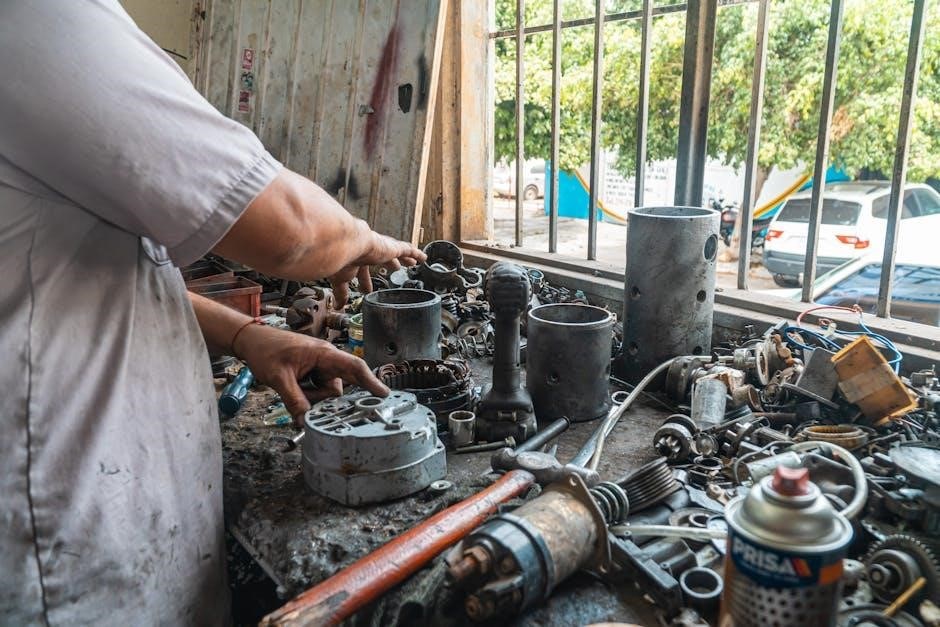
Maintenance & Repair Resources
Access comprehensive guides, diagrams, and replacement part lists within this manual, streamlining Taylor Dunn vehicle upkeep and ensuring efficient, reliable repairs.
Common Taylor Dunn Parts Replacements
Regular maintenance necessitates periodic part replacements to sustain optimal Taylor Dunn vehicle functionality. Frequently replaced components include contact tips, worn tires exhibiting uneven tread, and damaged drive belts impacting power transmission. Brake pads require consistent inspection and eventual replacement to ensure reliable stopping power, while solenoid replacements address electrical system malfunctions.
Furthermore, motor brushes experience wear and tear, diminishing performance over time, necessitating their routine substitution. Battery chargers often fail, demanding replacements for consistent power delivery. Steering components, like tie rod ends, may loosen, requiring attention. Regularly checking and replacing these parts proactively minimizes downtime and extends the vehicle’s operational lifespan, contributing to cost-effective long-term performance and safety.
Troubleshooting Guides & Diagrams
Comprehensive troubleshooting guides are essential for diagnosing and resolving issues within Taylor Dunn vehicles. Detailed diagrams illustrate component locations and wiring schematics, aiding in accurate identification of faulty parts. These resources cover common problems like motor failures, brake malfunctions, and electrical shorts, providing step-by-step instructions for effective repair.
Flowcharts assist in pinpointing root causes, while exploded views simplify reassembly procedures. Access to these guides minimizes reliance on specialized technicians, empowering operators to perform basic maintenance and repairs independently. Utilizing these resources ensures efficient problem-solving, reduces downtime, and maintains vehicle operational integrity, ultimately extending its service life and optimizing performance.
Where to Purchase Taylor Dunn Parts
Sourcing genuine Taylor Dunn parts is crucial for maintaining vehicle performance and safety. Authorized Taylor Dunn distributors offer a wide selection of components, ensuring compatibility and quality assurance. Online retailers specializing in industrial vehicle parts also provide convenient access, often with detailed parts catalogs and competitive pricing.
Directly contacting Taylor Dunn’s customer service department can facilitate locating hard-to-find items or obtaining expert advice. When purchasing, always verify part numbers against your vehicle’s manual to guarantee a proper fit. Beware of counterfeit parts, prioritizing reputable suppliers to avoid compromising vehicle reliability and longevity. Careful sourcing ensures optimal performance and minimizes future repair costs.